Tor2Door Market: History, Features and Verification
Tor2Door market emerged as one of the largest darknet marketplaces in 2022, claiming around 10,000 listings less than two years after launch. Unlike many platforms that reused existing code, its administrators built the site from scratch with a custom interface and an integrated cryptocurrency exchange. The market accepted both Bitcoin and Monero, offered multisig escrow, and kept vendor bonds low to attract sellers displaced by other market closures. Understanding how Tor2Door operated and why users trusted or avoided it offers insight into how darknet markets compete for users and how phishing clones exploit popular names.
What Tor2Door Market Was
Tor2Door was a darknet marketplace accessible only through the Tor browser, operating as a hidden service on the onion network. It sold both physical goods and digital products, with roughly two-thirds of its listings in the drugs category, divided into 47 subcategories. The remaining inventory covered fraud tools, counterfeit items, digital products, software, hosting services, jewelry, and miscellaneous offerings.
The platform used an account-based escrow system, holding buyer funds until delivery was confirmed. Vendors paid a modest bond, and established sellers from other markets could have this fee waived entirely. This low barrier to entry helped the market grow rapidly during a period when several competing platforms had closed or been seized.
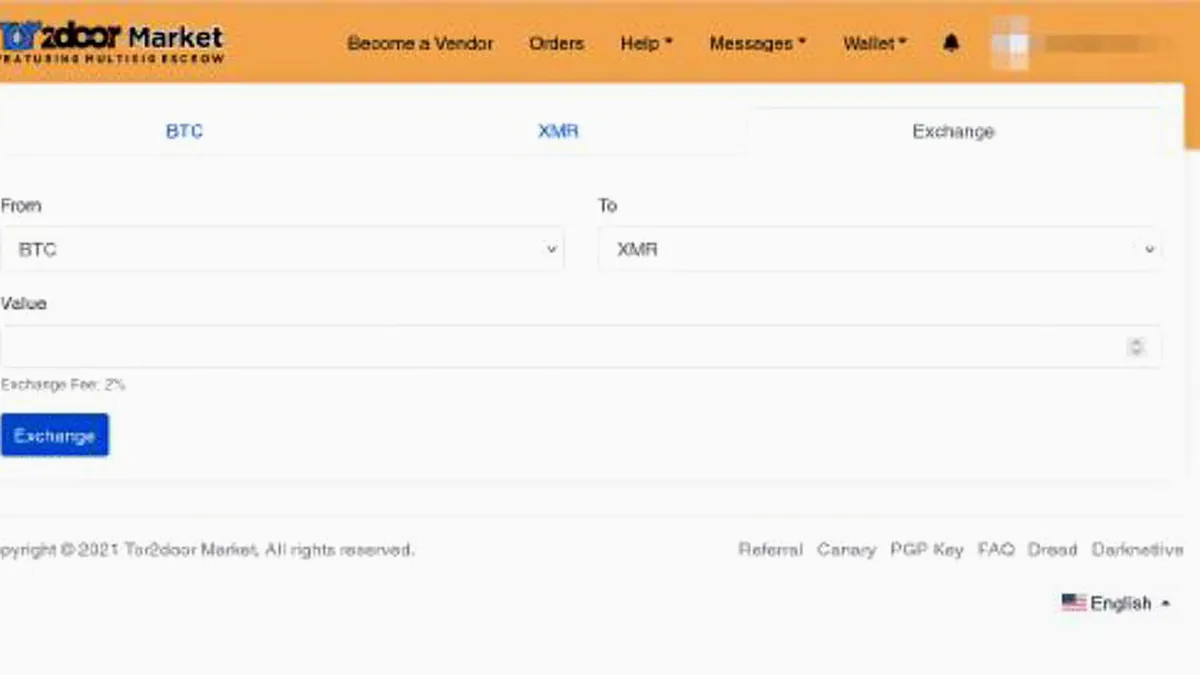
Tor2Door distinguished itself with a completely original codebase rather than cloning existing market software. The administrators claimed they wrote every line themselves, resulting in a user interface that felt different from the standard darknet market template. The site supported both Bitcoin and Monero payments and included a built-in exchange feature that let users convert between the two cryptocurrencies without leaving the platform.
How the Multisig Escrow System Worked
Tor2Door offered a 2-of-3 multisig escrow option for Bitcoin transactions, a feature that gave buyers more control over their funds compared to standard escrow. In a multisig setup, three parties hold keys: the buyer, the vendor, and the market. Any two of the three must sign a transaction for funds to move, which means the market cannot unilaterally seize coins during an exit scam.
To use this feature, buyers had to attach a Bitcoin extended public key (xpub) to their account. When placing an order, the buyer would sign the transaction with their private key, and either the vendor or the market would provide the second signature to release payment. If a dispute arose, the market could side with either party by adding its signature.
The market's documentation recommended multisig for purchases above $500, acknowledging that the extra steps were worth the security for larger amounts. However, multisig was not mandatory, and many vendors remained FE-enabled, meaning buyers could finalize early and release funds before receiving goods. This flexibility appealed to experienced users who understood the trade-offs but left newcomers vulnerable to scams if they finalized early with untrusted sellers.
The Built-In Cryptocurrency Exchange
One feature that set Tor2Door apart was its integrated exchange, which allowed users to swap Bitcoin and Monero directly within their market account. This was particularly useful for vendors who wanted to convert earnings into Monero for better privacy or into Bitcoin for easier withdrawal to traditional exchanges.
Most darknet markets required users to handle currency conversion off-platform, either through centralized exchanges that demanded identity verification or through peer-to-peer services that carried their own risks. By embedding this function, Tor2Door reduced the number of external services users had to trust and simplified the workflow for vendors managing multiple currencies.
The exchange rate and any fees were set by the market, and users had no way to verify whether the rate was competitive with external services. This convenience came with the risk that the market could manipulate rates or skim additional profit from conversions. Still, for vendors processing dozens of transactions, the time saved often outweighed concerns about a few percentage points in exchange fees.
Why Vendors and Buyers Chose Tor2Door
Tor2Door grew rapidly in 2022 by targeting vendors displaced from other markets. Low vendor bonds and waived fees for established sellers made it easy for experienced operators to migrate their customer base. The market's custom codebase also suggested that it was less likely to share vulnerabilities with other platforms, a selling point after several markets had been compromised through common software flaws.
Buyers appreciated the detailed category structure, especially the 47 drug subcategories that made it simple to filter listings. The multisig option gave cautious users a way to protect larger purchases, while the built-in exchange saved time for those juggling multiple wallets.
However, the market had notable weaknesses. It did not enforce PGP encryption for buyer-vendor communications, leaving messages vulnerable if the server was ever seized. The FAQ and support documentation were minimal, offering little guidance for users unfamiliar with escrow, multisig, or dispute resolution. This bare-bones approach suggested that the administrators prioritized rapid growth over user education, a pattern that often precedes either an exit scam or a law-enforcement takedown.
Phishing Clones and the Tor2Door Market URL Problem
As Tor2Door gained popularity, phishing clones multiplied. Scammers registered similar onion addresses and created pixel-perfect copies of the login page, hoping users would enter credentials or deposit funds. Because onion addresses are long random strings, users often relied on bookmarks, search engines, or link directories, all of which could be poisoned.
The correct tor2door market link could only be verified through PGP-signed messages from the administrators, typically posted on trusted forums like Dread. Any tor2door market url found through a web search or an unverified directory carried a high risk of being a phishing site. Users who logged in to a clone would have their account credentials stolen, and any funds deposited would vanish immediately.
To reduce this risk, experienced users checked the PGP signature on every link, even if it came from a source they had used before. They also enabled two-factor authentication where available and never reused passwords across markets. The tor2door darknet market name became so well-known that phishing operators could count on a steady stream of victims who trusted a familiar-looking interface without verifying the address.
Context: How Darknet Markets Rise and Fall
Public law-enforcement press releases show that most major darknet markets are eventually seized or shut down, often after months or years of surveillance. Operation Bayonet in 2017 and Operation DisrupTor in 2020 demonstrated that agencies infiltrate markets, collect user data, and coordinate arrests across multiple countries. This means that even a market that appears secure today may already be compromised.
Tor Project documentation explains that onion services can be deanonymized if an adversary controls enough Tor relays or if the server itself is misconfigured. Markets that do not enforce PGP encryption leave all communications readable to anyone who gains access to the database, whether through a hack or a seizure. This is why security researchers consistently recommend end-to-end encryption for any sensitive message, regardless of the platform's reputation.
Court records from past cases reveal that vendors and buyers are often identified through operational security mistakes rather than flaws in Tor itself. Reusing usernames, shipping from the same address, or discussing orders over unencrypted channels all create trails that investigators can follow. For readers, this means that the market's security features matter less than personal discipline: using PGP, avoiding address reuse, and never linking darknet activity to real-world identity.
Verifying Any Market Address Safely
The safest way to verify a tor2door market link or any darknet market address is to check PGP-signed announcements from the administrators. These signatures prove that the message came from the holder of the private key, and they cannot be forged by phishing sites. Most markets post signed links on forums like Dread, and some maintain a presence on secure messaging platforms.
Never trust a link from a search engine result, a random Telegram channel, or an unverified directory. Even well-known link aggregators can be compromised or outdated. Instead, download the market's public PGP key from multiple sources, verify the fingerprint matches across all of them, and then check the signature on any link before clicking.
If you are uncertain about a link, visit the Useful Resources page on this site for guidance on PGP verification and trusted forums. Cross-reference every address with at least two independent signed sources. This process takes a few extra minutes but eliminates the most common cause of fund loss on the darknet: logging in to a phishing clone that looks identical to the real site.
What This Means for Security Awareness Today
Tor2Door's rapid growth in 2022 illustrated how quickly a new market can attract users when established platforms close. Its custom codebase and integrated exchange showed that innovation still happens in this space, but the lack of enforced encryption and minimal documentation also highlighted the trade-offs that come with fast expansion. Whether the market is still online, has exit-scammed, or been seized is information that changes frequently and should be verified through current signed announcements rather than old articles.
For anyone researching darknet markets, the lesson is that popularity does not equal safety. A market with thousands of listings can disappear overnight, taking user funds with it. Multisig escrow and PGP encryption are tools that shift some risk away from the platform, but they require effort to use correctly. The real defense is skepticism: verify every link, encrypt every message, and assume that any market could be the next to vanish. Start by learning PGP verification on a test message today, before you ever need it in a high-stakes situation.
Frequently asked questions
What was Tor2Door market known for?
Tor2Door was known for its custom-built codebase, large selection of around 10,000 listings, and integrated cryptocurrency exchange that let users swap Bitcoin and Monero without leaving the platform. It also offered multisig escrow for Bitcoin payments and kept vendor bonds low to attract sellers from other markets. The site had a unique interface and grew rapidly in 2022.
How do I verify a tor2door market link is real?
Verify any tor2door market url by checking PGP-signed announcements from the administrators, typically posted on trusted forums like Dread. Download the market's public PGP key from multiple independent sources, confirm the fingerprint matches, and then verify the signature on the link. Never trust links from search engines, Telegram channels, or unverified directories, as phishing clones are common.
Is Tor2Door market still online?
The status of any darknet market changes frequently due to law enforcement actions, exit scams, or technical issues. Information from 2022 showed Tor2Door was active at that time, but current status should be verified through recent PGP-signed announcements on trusted forums. Old links and articles may point to phishing clones or seized domains.
What is multisig escrow on Tor2Door?
Multisig escrow on Tor2Door was a 2-of-3 system where the buyer, vendor, and market each held a key, and any two signatures were required to release funds. Buyers attached a Bitcoin extended public key to their account and signed transactions with their private key. This prevented the market from unilaterally taking funds during an exit scam, though it required extra setup steps.
Why do phishing clones target tor2door market?
Phishing clones target popular markets like Tor2Door because users searching for the tor2door darknet market often rely on bookmarks, search results, or link directories that can be poisoned. Scammers create identical-looking login pages on similar onion addresses to steal credentials and funds. The only reliable defense is verifying every link with a PGP signature from the administrators before logging in.