Torch Compared to Ahmia, Haystak and Other Onion Search Tools
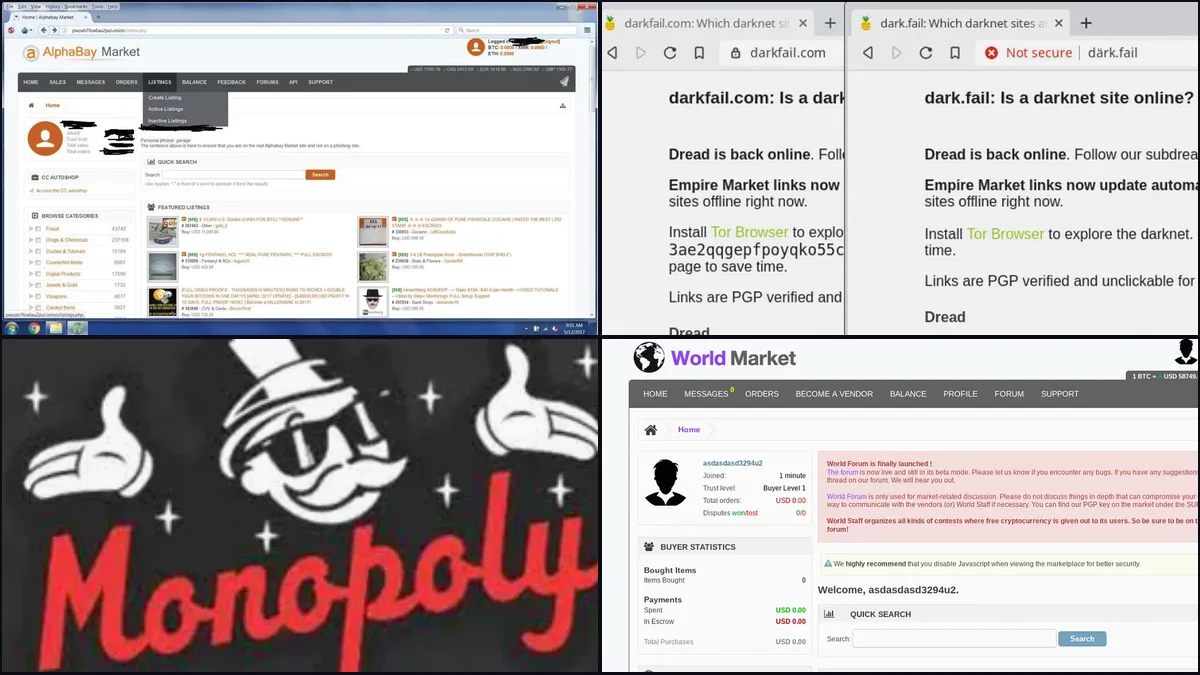
Torch is not the only search engine for onion services. Ahmia filters out abusive content and is accessible from the ordinary web. Haystak claims a larger index but serves ads. Recon is a paid service for threat-intelligence researchers. Each has a different audience and a different set of trade-offs. Torch sits in the middle: older than most, less filtered than Ahmia, less commercial than Haystak. Knowing which tool fits your purpose saves you from using the wrong one and drawing the wrong conclusions.
What Torch Actually Indexes
Torch's crawler visits onion services and records the text it finds. It does not index images, videos or content behind login forms. It does not execute JavaScript, so services that require it are invisible to Torch. It does not index pages that block crawlers through robots.txt or other mechanisms.
These limitations mean that Torch sees a subset of a subset. The dark web as a whole is already a small fraction of the internet. The portion of the dark web that is crawlable by a text-only crawler is a fraction of that fraction. The search results you see are therefore not representative of what exists on onion services. They are representative of what a particular crawler could reach at a particular time.
The practical implication is that an empty or sparse Torch result for your query does not mean the information does not exist on the dark web. It means Torch did not find it. The distinction matters if you are using Torch for research or investigation.
How the Torch Crawler Works
A web crawler starts with a list of known addresses, visits each one, extracts the text and any links it finds, adds new links to its queue and repeats. This is how Google, Bing and every other search engine builds its index. Torch applies the same process to onion services.
The difference is scale. Google crawls billions of pages with thousands of machines. Torch crawls an unknown number of onion services with unknown resources. Its index is smaller, its crawl is slower and its coverage is sparser. These are not criticisms. They are the constraints of operating a search engine on a network where crawling is harder and the number of services is smaller.
Torch's crawler also has to contend with services that are designed to resist crawling. Some onion services use CAPTCHAs, rate limiting or authentication requirements that stop crawlers. Others are simply slow, and the crawler times out before it can index them.
The Result Volatility Problem
Search for the same thing on Torch a week apart and your results will differ, sometimes dramatically. Onion services that were online during the first search may have gone offline by the second. Services that changed their content may show different snippets. Services that the crawler had not yet discovered may appear for the first time.
This volatility is not a sign that Torch is broken. It reflects the reality of the network it indexes. Onion services have higher churn than ordinary websites. A study published by researchers at the Alan Turing Institute found that a typical onion service is reachable for a matter of months, not years. A search index built on such a network will always be out of date in places.
The practical response is to treat Torch results as leads, not facts. A result tells you that a service existed when Torch last crawled it. Whether it still exists and whether it is trustworthy are questions for separate verification.
Reality Layer: What Research Tells Us About Onion Search
Academic research on dark-web search engines consistently finds low coverage. A 2017 study by researchers at the University of Luxembourg measured the overlap between different onion search engines and found that each indexed a largely different set of services. No single search engine covered more than a fraction of the discoverable onion services. Source type: academic research on dark-web measurement.
The Tor Project itself notes that onion services are designed to be private by default. A service that does not advertise its address and is not linked from other services may never be discovered by a crawler. The search engine problem on the dark web is therefore partly a design choice, not a technical limitation that a better crawler could solve. Source type: Tor Project documentation.
This matters because it means that dark-web search engines are fundamentally different from ordinary search engines. They are not a comprehensive map of what exists. They are a partial snapshot of what was publicly reachable when the crawler last passed through.
Using Torch for Research: A Practical Framework
If you are researching a specific topic on the dark web, Torch can be part of your approach but should not be the whole approach. Combine it with other search engines such as Ahmia and Haystak to increase coverage. Compare results across engines to identify services that appear in multiple indexes, which may indicate longer uptime.
For each result, check whether the service has a clearnet presence or PGP-signed documentation that allows independent verification. A service that exists only as an onion address with no external footprint is harder to assess. Its claims about itself cannot be checked against any source other than itself.
Document the date of your search and the results you found. If you need to return to the same search later, the date helps you interpret changes. What looked like a dead service may simply have been temporarily unreachable. What looked like a new service may have been online for months but only recently crawled.
Sources and official tools
Official references checked when this guide was written. Product links contain no affiliate tracking.
Frequently asked questions
Is Torch the best dark web search engine?
Torch is the oldest but not necessarily the best. Each search engine indexes a different subset of onion services. The best approach is to use multiple engines and compare results rather than relying on one.
Can Torch find anything on the dark web?
No. Torch can only find onion services that are publicly reachable, do not require authentication and have been discovered by its crawler. This is a fraction of all onion services.
Why do Torch results keep changing?
Onion services go offline frequently. Torch's crawler revisits services on its own schedule, so results may reflect the state of a service days or weeks ago, not its current state.
Is Torch safe to use?
Torch itself is a search engine and does not host malicious content. But its results link to onion services that may be unsafe. Always verify a service independently before interacting with it.