Is There a Real Hidden Wiki Onion Address?
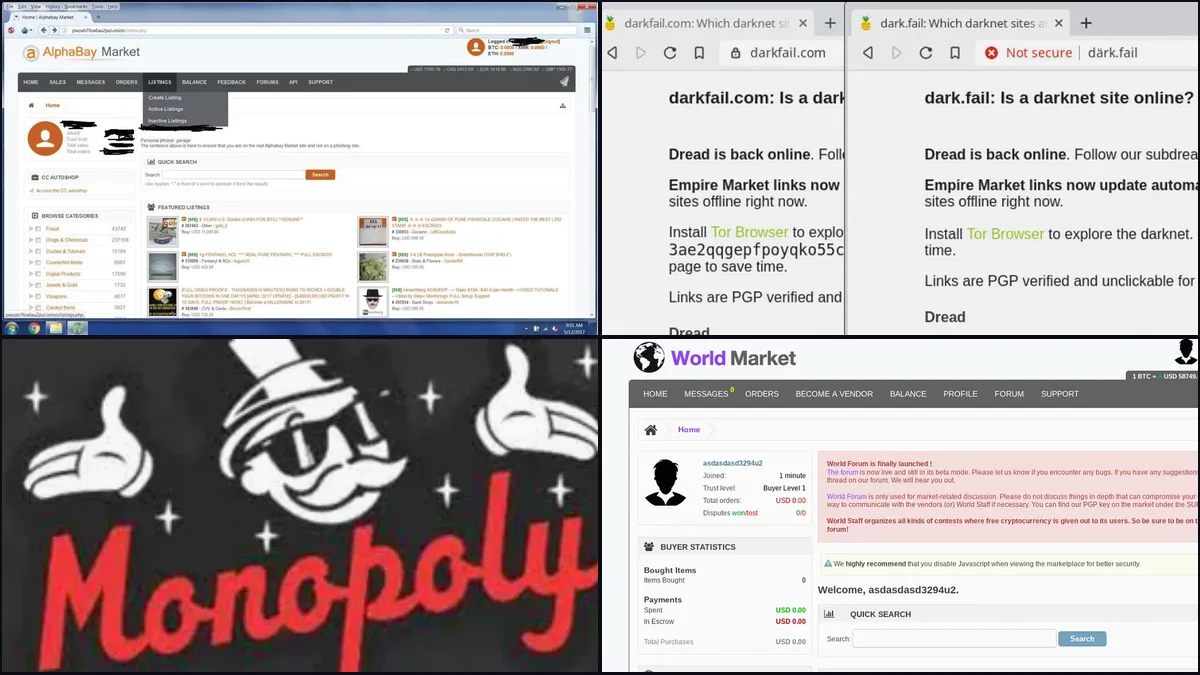
Every forum thread that asks for the real Hidden Wiki onion address gets ten different answers and a warning. That pattern has repeated for years, and it tells you more than any single address could. The Hidden Wiki was never one service with one address. It was a concept, a page that anyone could copy, and its onion address changed every time the hosting changed or the previous copy went offline. If someone sends you an address today and calls it official, ask them how they verified it. The answer will usually involve trusting another directory, which is the same problem one step removed.
The Address That Never Stays the Same
An onion address is a cryptographic identifier derived from the service's public key. When the server changes, the key changes, and the address changes with it. This is not a bug; it is how onion services protect against impersonation. But it means that a directory's address lasts only as long as the current server does.
The original Hidden Wiki changed addresses each time its hosting changed. An address posted on a forum in one month might lead to an error page the next. This created an information gap that clone operators were quick to fill. They would register a new address, copy the last known version of the directory and promote their copy as the continuation.
Today, if you find ten addresses that all claim to be the Hidden Wiki, the most likely explanation is that none of them are the original and some of them are deliberately deceptive. The cryptographic design of onion services, which makes addresses hard to forge, also makes it impossible to tell from the address alone whether the service behind it is genuine.
A Checklist for Evaluating Any Onion Directory
Before clicking links in any directory, run through these checks. They take less than a minute and they reduce the most common ways people get phished.
- Does the directory explain how it verifies its listings? If the answer is absent or vague, assume no verification happens.
- Does the directory display a PGP key and sign its own content? An unsigned page can be altered by anyone who gains access to the server.
- Are the listings dated? A directory without dates cannot tell you whether a service was online last week or three years ago.
- Does the directory link to independent sources, such as official project websites on the clearnet? Directories that only link to other onion services create a closed loop of unverified claims.
- Does the directory warn you that links may be phishing attempts? An honest directory acknowledges its own limitations.
The Phishing Directory Economy
Running a phishing directory is cheap. The operator registers an onion address, copies the layout of a legitimate directory and fills it with links to services they control. Each click that results in a login or a deposit generates revenue. The directory itself becomes a funnel.
It is hard to estimate how many directories are phishing operations, because victims rarely report falling for them. But security researchers at threat-intelligence firms have documented cases where a single phishing operator ran multiple directories under different names simultaneously, each targeting a different audience. One directory might imitate the Hidden Wiki; another might imitate a market listing site; a third might imitate a forum index.
This is not a marginal problem. It is the dominant business model for onion directories. The legitimate directory operator who verifies listings and updates them daily is the exception, and they have no way to prove to you that they are the exception.
How Law Enforcement Uses Directories
Public court records and press releases describe operations in which law-enforcement agencies ran onion services. The FBI operated a child-abuse site called Playpen for nearly two weeks in 2015 to deploy network investigative techniques. Europol's DisrupTor operation in 2020 involved services that had been taken over by law enforcement.
A directory is an attractive target for law enforcement because it sits at the entry point. Someone who controls the directory can see which links visitors click and can redirect traffic to a monitored service. They can also add new listings that point to law-enforcement-operated services.
This does not mean every directory is run by law enforcement. It means that the directory model has a surveillance risk built into it, and the risk is not theoretical. It has been documented in court. Source types: FBI press releases and court filings, Europol operational announcements.
What Experienced Tor Users Do Instead
People who use Tor regularly do not start with a directory. They start with a specific service they already know about from an independent source. They obtain its address through a channel separate from the directory, such as a PGP-signed message or the service's clearnet website. They bookmark the address and return to it directly.
This practice has a name: verification, not discovery. The goal is not to find new services but to confirm that the service you intend to reach is the one you are reaching. A directory is a discovery tool. Trusting it for verification as well puts both functions in the hands of the same unknown operator.
Reality Layer: What the Research Shows
Academic studies of onion services consistently measure high turnover. A 2016 paper by researchers at King's College London found that over half of onion services were unreachable within a few months. Directories that list hundreds of services are therefore mostly lists of services that no longer exist. Source type: academic research published at the World Wide Web Conference.
Tor Project documentation explicitly warns that onion services do not authenticate the service operator. The network protects the connection; it does not tell you who is on the other end. Source type: Tor Project official documentation.
These findings matter because they shift the burden of verification from the directory to the user. No directory can solve the authentication problem for you. The sooner you accept that, the less likely you are to trust a directory that claims otherwise.
Practical Steps for Safer Directory Use
If you choose to use a directory despite the risks, these practices reduce the most likely harms. They are not guarantees. They are harm-reduction steps adapted from what security researchers recommend.
- Never enter a password, private key or seed phrase on a site you reached through a directory without first verifying the address independently.
- Check whether the service has a PGP-signed announcement with its current address. If it does not, treat the directory listing as unverified.
- Avoid directories that mix categories such as markets, forums and email providers without indicating how each listing was checked.
- If a directory displays advertisements or sponsored listings, assume those listings received priority over accuracy.
- Bookmark verified addresses and stop using the directory as your primary access point.
Sources and official tools
Official references checked when this guide was written. Product links contain no affiliate tracking.
Frequently asked questions
Is there a real hidden wiki onion?
The term describes a type of directory that has been copied many times. Some copies may contain genuine links, but there is no single authoritative version, and many copies are phishing operations. Always verify addresses independently.
How can I tell if a directory link is a phishing trap?
You cannot tell from the link text alone. The only reliable method is to find a PGP-signed announcement from the service operator through a separate channel and compare the address.
Are there any safe onion directories?
A directory is only as safe as its operator's verification practices, which you cannot independently verify. The safest approach is to treat every directory listing as unverified until you check it against an independent source.
What should I do if I clicked a phishing link?
If you entered credentials, change them immediately on the legitimate service. If you sent cryptocurrency, the transaction is likely irreversible. Report the phishing address to the legitimate service so they can warn other users.