Hidden Wiki in 2022 and 2023: More Copies, Same Risks
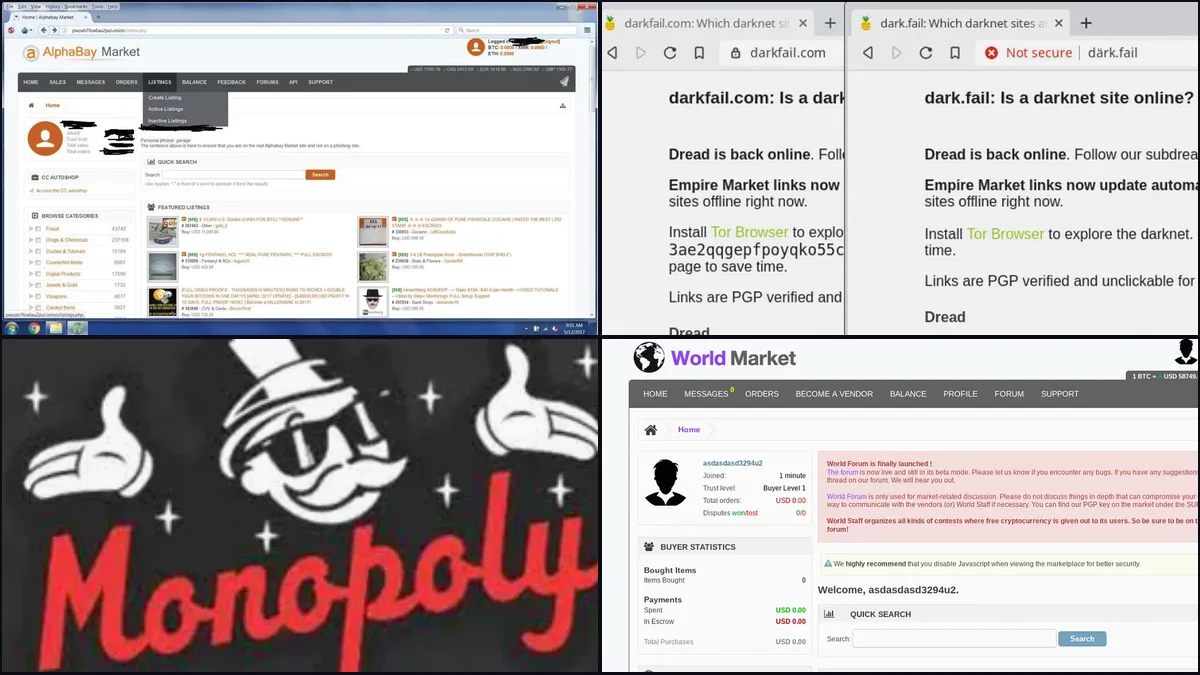
People search for a Hidden Wiki from a specific year hoping to find a snapshot of what was online at that time. The darknet does not work that way. When a directory goes offline, its address stops resolving, and its content is gone unless someone archived it. The copies that appeared in subsequent years were new directories with new operators. Some copied the old layout and category names. Others filled their pages with sponsored listings for markets that paid for placement. The branding stayed the same; the operators, motives and trustworthiness did not.
What the Phrase Actually Refers To
The search term that brought you here describes something real: a directory of onion services that people have used as a starting point for exploring the Tor network. But the phrase has been copied, repurposed and attached to so many different services that it no longer points to any single, trustworthy destination.
Understanding this is the first step toward using any directory safely. You are not looking for a specific website. You are looking for a function: a list of onion services that someone has collected and categorised. The function is useful. The question is whether the person who collected the list is honest about what they collected and whether they verified it.
A Short History of Onion Directories
Onion directories appeared soon after the Tor network began supporting onion services. The first directories were simple text files listing addresses and descriptions. They were shared on forums and updated when someone noticed a link was dead. This manual curation was slow, but the directories were small and the community that maintained them was motivated.
As the number of onion services grew, manual curation became impossible. Directories that tried to list everything became outdated. Directories that focused on a specific category, such as markets or forums, stayed more current but served a narrower audience. The directory that tried to be comprehensive lost accuracy. The directory that maintained accuracy lost breadth. This trade-off has never been resolved.
The Verification Gap
An onion directory can tell you that a service exists. It cannot tell you that the service is operated by the person it claims to be operated by. This is the verification gap, and it is the central problem of every directory.
On the ordinary web, domain names and TLS certificates provide a partial solution. A bank's domain name is registered with a public registrar, and its certificate is issued by a certificate authority that verified the bank's identity. Onion services lack an equivalent infrastructure. The address proves that you connected to the service with the corresponding private key. It does not prove that the key holder is who they say they are.
Tor Project documentation makes this clear. The network authenticates the service, not the operator. Any directory that claims to have verified the operators of the services it lists is making a claim it cannot substantiate with the technology available.
Reality Layer: Why Directories Cannot Keep Up
A directory is only as current as its last update. Onion services go offline, change addresses or are seized at unpredictable times. A directory that updated weekly would contain dead links within days. A directory that updated daily would require continuous effort from its operator.
Academic research confirms this. Studies that measured onion-service uptime found that a significant fraction of services were unreachable after a few months. A directory listing from earlier in the year is not a reliable guide to what is online now. Source type: academic research on onion-service availability.
This matters because it means that a directory is always working against a clock. The older a listing, the less likely it is to be accurate. Directories that do not display dates for each listing are hiding the one piece of information that would help you judge their currency.
Practical Steps for Safer Directory Use
If you choose to use a directory despite the risks, these practices reduce the most likely harms. They are not guarantees. They are harm-reduction steps adapted from what security researchers recommend.
- Never enter a password, private key or seed phrase on a site you reached through a directory without first verifying the address independently.
- Check whether the service has a PGP-signed announcement with its current address. If it does not, treat the directory listing as unverified.
- Avoid directories that mix categories such as markets, forums and email providers without indicating how each listing was checked.
- If a directory displays advertisements or sponsored listings, assume those listings received priority over accuracy.
- Bookmark verified addresses and stop using the directory as your primary access point.
Sources and official tools
Official references checked when this guide was written. Product links contain no affiliate tracking.
Frequently asked questions
Is there a real hidden wiki dark web link?
The term describes a type of directory that has been copied many times. Some copies may contain genuine links, but there is no single authoritative version, and many copies are phishing operations. Always verify addresses independently.
How can I tell if a directory link is a phishing trap?
You cannot tell from the link text alone. The only reliable method is to find a PGP-signed announcement from the service operator through a separate channel and compare the address.
Are there any safe onion directories?
A directory is only as safe as its operator's verification practices, which you cannot independently verify. The safest approach is to treat every directory listing as unverified until you check it against an independent source.
What should I do if I clicked a phishing link?
If you entered credentials, change them immediately on the legitimate service. If you sent cryptocurrency, the transaction is likely irreversible. Report the phishing address to the legitimate service so they can warn other users.